
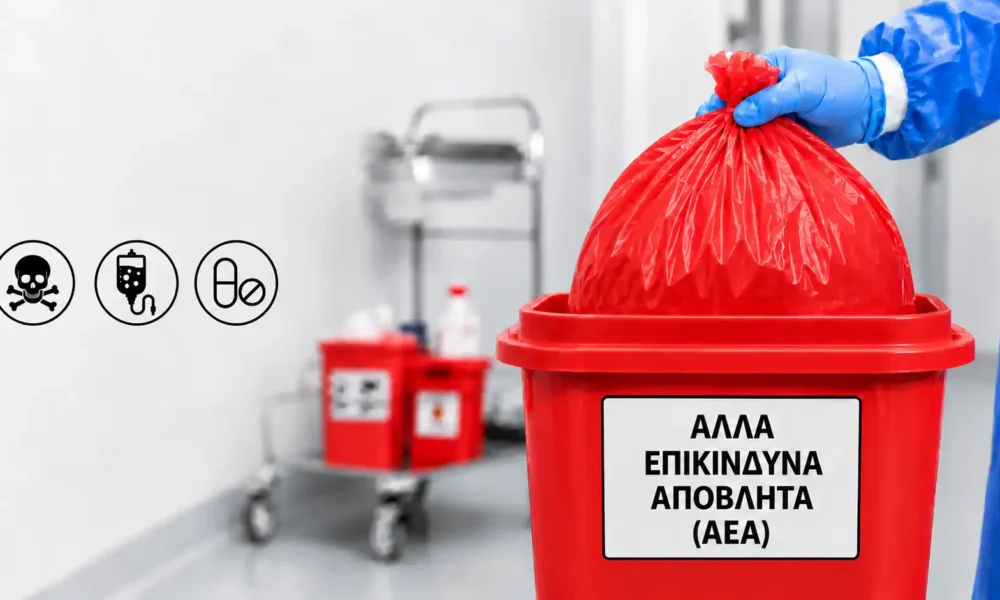
Άλλα Επικίνδυνα Απόβλητα (ΑΕΑ)
Τα Άλλα Επικίνδυνα Απόβλητα (ΑΕΑ) περιλαμβάνουν υλικά που απαιτούν εξειδικευμένη διαχείριση και αυστηρά μέτρα ασφαλείας, λόγω των επικίνδυνων χαρακτηριστικών τους και της πιθανής επίδρασής τους στη δημόσια υγεία και το περιβάλλον.
Τα ΑΕΑ παρουσιάζουν επικίνδυνες ιδιότητες, αλλά δεν έχουν μολυσματικό χαρακτήρα. Στην κατηγορία αυτή εντάσσονται απόβλητα όπως χημικές ουσίες, φαρμακευτικά κατάλοιπα, εργαστηριακά υλικά, καθώς και άλλα επικίνδυνα υλικά που παράγονται από υγειονομικές μονάδες, διαγνωστικά κέντρα, κλινικές, εργαστήρια και νοσοκομεία.
Πρόκειται για απόβλητα που απαιτούν ιδιαίτερη προσοχή στη συλλογή, αποθήκευση, μεταφορά και τελική διαχείριση, ώστε να αποτρέπεται ο κίνδυνος τραυματισμού, χημικής επιμόλυνσης ή περιβαλλοντικής επιβάρυνσης.
Η σωστή διαχείριση των ΑΕΑ είναι ζωτικής σημασίας για τη συμμόρφωση με το ισχύον νομοθετικό πλαίσιο, καθώς και για την προστασία των εργαζομένων, των ασθενών και του φυσικού περιβάλλοντος.
Στη SteriMed, εφαρμόζουμε πιστοποιημένες διαδικασίες για την ασφαλή συλλογή, μεταφορά και διαχείριση των Άλλων Επικίνδυνων Αποβλήτων (ΑΕΑ), αξιοποιώντας σύγχρονο εξοπλισμό, εξειδικευμένο προσωπικό και αυστηρά πρωτόκολλα λειτουργίας.
Η διαχείριση των ΑΕΑ περιλαμβάνει:
Με υπευθυνότητα, τεχνογνωσία και πολυετή εμπειρία, η SteriMed προσφέρει ολοκληρωμένες λύσεις για τη διαχείριση των Άλλων Επικίνδυνων Αποβλήτων (ΑΕΑ), συμβάλλοντας ενεργά στην προστασία της δημόσιας υγείας και του περιβάλλοντος.